
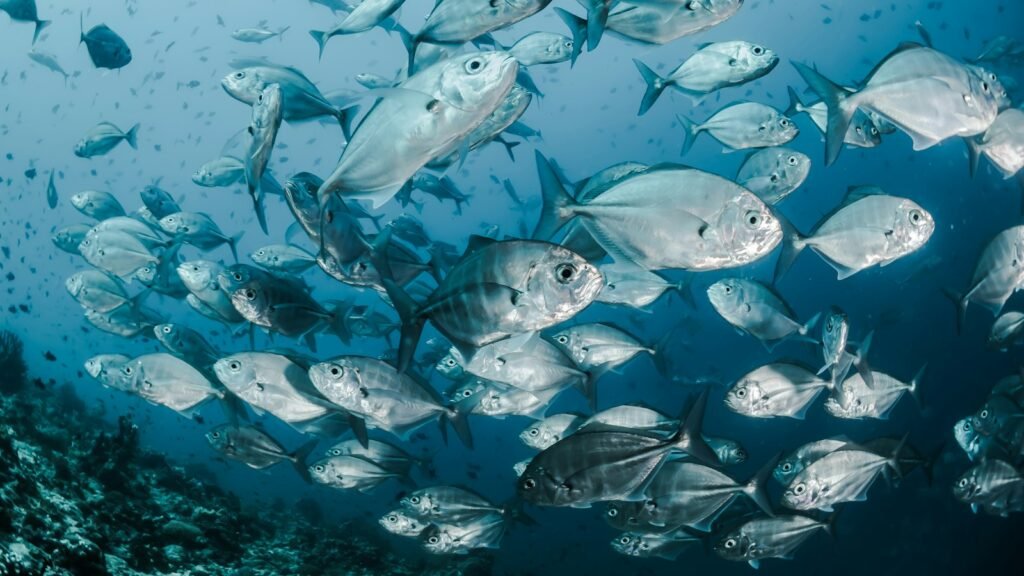
Seaweed farms are often described as good for marine life, and sometimes they are. They can also cause harm when they are placed or managed badly. The honest answer to whether a farm benefits biodiversity is that it depends on where it is, what it replaced, and how it is run. Buyers and investors who understand both sides are better placed to ask the right questions and avoid claims that will not stand up.
The possible benefits
A line of growing seaweed adds structure to open water or a bare sandy bottom. That structure can be used by other organisms:
- Shelter: small fish, juvenile fish and invertebrates such as crabs, shrimps and snails are commonly observed among seaweed lines, using them for cover and feeding.
- Food: the seaweed itself, and the tiny organisms that settle on it, provide food for grazers.
- Water quality: seaweed takes up dissolved nutrients as it grows, which may help locally where nutrient levels are elevated.
- An alternative livelihood: where seaweed farming replaces destructive fishing practices, pressure on reefs may fall, though this is not automatic.
These effects are real but variable, and many studies are small or site-specific. They are best described as possible benefits of a well-managed farm rather than guaranteed outcomes.
The possible harms
- Seagrass damage: farms placed over seagrass meadows can shade the plants and damage them through stakes, anchors and trampling during farm work.
- Coral damage: off-bottom farms on reef flats can break coral if stakes are driven into live reef, and heavy foot traffic adds to the damage.
- Changes to the seabed: dense farms can reduce water flow and change sediment patterns underneath.
- Marine litter: lost rope, plastic ties and bottle floats accumulate on beaches and reefs when materials are not recovered.
- Spread beyond farms: in some places where Kappaphycus has been introduced outside its native range, it has spread onto nearby reefs. This is a concern mainly for introductions to new regions and is a reason to be cautious about moving strains.
Good practice that tips the balance
Most harms are avoidable through choices made before and during farming. The following steps are widely recommended:
- Site on sand or rubble, not over dense seagrass or live coral. Our guide to choosing a farm site covers this in detail.
- Avoid overcrowding so that water keeps flowing through and between farms.
- Recover materials at the end of their life and avoid single-use plastic where alternatives exist; see ropes, floats and stakes.
- Limit trampling by working from boats where possible and keeping paths to the farm consistent.
- Use local planting material and follow rules on moving seaweed between areas.
- Respect protected areas and local zoning.
Talking about biodiversity honestly
Because the effects depend on context, broad statements such as “seaweed farming restores reefs” should be avoided unless there is site-level evidence. A more defensible position is that seaweed is a low-input crop — it needs no feed, fertiliser or freshwater, as explained in our low-input crop article — and that well-sited, well-managed farms can coexist with healthy marine habitats. Claims about carbon deserve similar care; see seaweed and blue carbon.
Frequently asked questions
Do seaweed farms increase fish numbers?
Farms often attract small fish and invertebrates, but attracting animals is not the same as increasing total populations. The evidence varies by site and species, so claims should be modest.
Is Kappaphycus an invasive species in Indonesia?
The concern about spread applies mainly where the species has been introduced to regions far outside its native range. Indonesia lies within the broader Indo-Pacific region where these seaweeds occur, but moving strains between areas should still follow local guidance.
How can a buyer check a farm’s environmental practice?
Ask where the farms are sited, what lies beneath them, how materials are recovered and whether farmers receive guidance on these points. A field visit shows far more than a written policy.
Working with Kospermindo
Kospermindo has supported seaweed farmer groups in South and Central Sulawesi since 2002, providing mentoring and technical assistance through its Farmer Group Centres. Contact us to discuss the areas and practices behind our supply.