
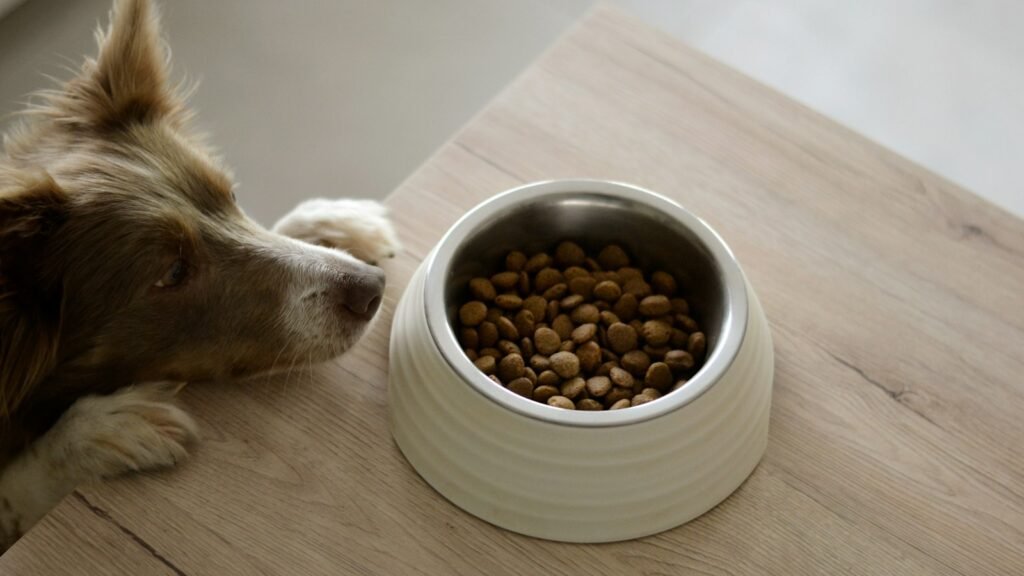
Seaweed reaches animals by two quite different routes. In wet pet food, it arrives as carrageenan, a refined ingredient that binds meat pieces and sets the jelly or gravy around them. In livestock and aquaculture feed, it can arrive as whole seaweed, dried and ground into meal. The two uses ask very different things of the raw material, and it helps suppliers and buyers to keep them apart.
Carrageenan as a binder in wet pet food
Canned and pouched pet foods are typically made by mixing meat, by-products, water and other ingredients, filling the container and heat-treating it. Without a binder, the result would separate into loose solids and liquid. Carrageenan, usually the kappa type from Kappaphycus alvarezii (cottonii), forms a gel as the product cools, holding a loaf together or setting a clear jelly around chunks. It is often combined with other gums, such as locust bean gum or cassia gum, which change the texture of the gel and make it less brittle.
Pet food makers value carrageenan for how it behaves through heat treatment and for the consistent texture it gives from batch to batch. For many of them, a cost-effective semi-refined grade is enough, since clarity matters less than in human food. Our explainers on kappa, iota and lambda carrageenan and on semi-refined and refined processing give the background.
Seaweed meal in livestock and aquaculture feed
Dried, milled seaweed has a long history as a feed ingredient in coastal regions, and today it is sold as a supplement for livestock, poultry, horses and fish. Brown seaweeds from cold waters are the most common source, but tropical red seaweeds and by-products of processing are also used. Seaweed meal is valued mainly as a source of minerals and trace elements, and for the fibre and other compounds it contains.
Research into further benefits, including effects on animal health and on methane from cattle, is active, but results vary by species of seaweed, dose and animal, and some promising findings involve particular seaweeds rather than seaweed in general. Suppliers should not describe ordinary seaweed meal as having proven health or climate effects unless the specific product has the evidence and approvals to support it.
Two uses, two sets of quality needs
The difference is easiest to see side by side:
- Species: carrageenan for pet food needs a defined carrageenan source such as cottonii; feed meal may accept a wider range of seaweeds, but the buyer will still want it named.
- Key measure: for carrageenan, yield and gel performance after processing; for meal, composition, including minerals, ash and moisture.
- Contaminants: both uses expect limits on heavy metals and on foreign matter. Some seaweeds accumulate iodine or arsenic, which feed rules may limit.
- Cleanliness: sand and salt reduce carrageenan yield; in meal they end up in the animal’s diet and count against the product’s specification.
- Regulation: carrageenan is an approved additive in pet food in many markets; seaweed meal is regulated as a feed material, with its own labelling and safety rules that differ between countries.
What this means for raw seaweed suppliers
For most farmers and cooperatives, pet food is not a separate market but one of the end uses of seaweed sold to carrageenan processors. The same things that matter for human food ingredients matter here: clean, well-dried seaweed of a known species, consistent from lot to lot, with records that let a processor trace a problem back. Buyers of seaweed for feed meal will ask similar questions, with added attention to contaminant testing. A clear specification sheet is the right starting point for either.
Frequently asked questions
Is carrageenan safe in pet food?
Food-grade carrageenan is approved for use in pet food in many markets, and regulators have reviewed it repeatedly. Debate about carrageenan continues in some consumer circles, so pet food brands often ask suppliers for full documentation on grade and origin.
Can any dried seaweed be sold as animal feed?
No. Feed is regulated, and a seaweed meal usually needs a named species, a composition analysis and contaminant testing that meets the rules of the market where it is sold. The details vary by country.
Does pet food use lower-quality seaweed?
Not necessarily lower quality, but often a different grade of processed carrageenan. The raw seaweed still has to be clean and well dried, because contamination and poor drying reduce yield whatever the end use.
Working with Kospermindo
Kospermindo aggregates seaweed from organised farmer groups in South and Central Sulawesi and works in long-term partnerships with processing factories and exporters. For supply enquiries, contact us.