
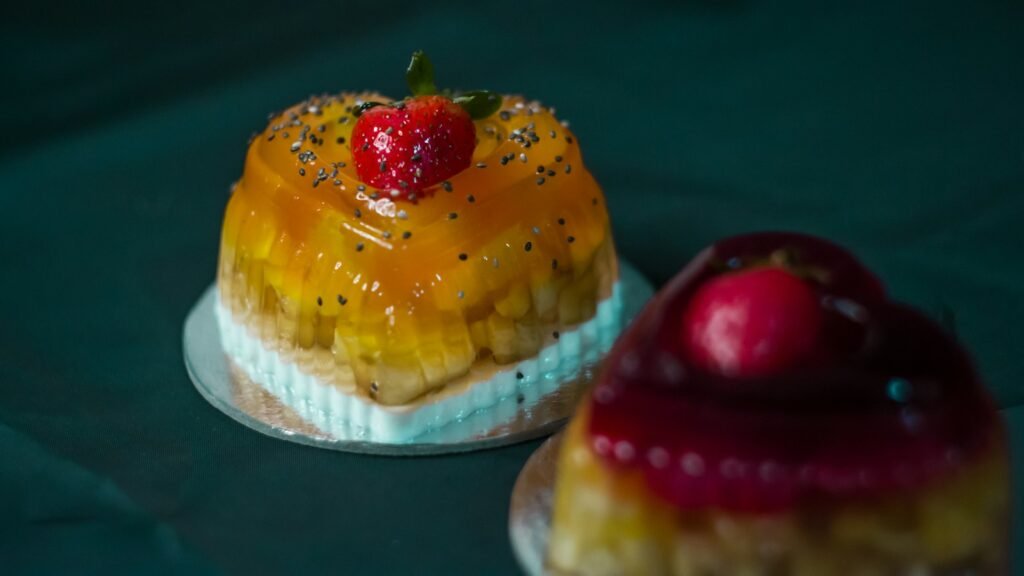
Carrageenan is a natural gum extracted from certain red seaweeds. It is used to thicken liquids, set gels and keep ingredients from separating, usually in very small amounts. On a food label in Europe and many other markets it appears as E407, or as E407a when it is the less purified “processed Eucheuma seaweed”. It is not a single substance but a family of related molecules, and the three main types behave quite differently.
Where Carrageenan Comes From
Chemically, carrageenans are long chains of sugar units carrying sulphate groups. They form part of the cell walls of red seaweeds, where they help the plant stay flexible in moving water. Almost all commercial carrageenan now comes from two farmed tropical species: Kappaphycus alvarezii (cottonii), the source of kappa, and Eucheuma denticulatum (spinosum), the source of iota. We compare the two in Cottonii and Spinosum: The Two Red Seaweeds Behind Carrageenan.
Indonesia is one of the world’s largest producers of these tropical red seaweeds. Farming them needs no feed, fertiliser or freshwater; the plants grow on lines in shallow coastal water.
The Three Types at a Glance
- Kappa: forms firm, rather brittle gels, especially with potassium. It binds strongly with milk proteins. Gels may release water over time and generally do not tolerate freezing well.
- Iota: forms soft, elastic gels, especially with calcium. Broken gels tend to re-form, and they cope better with freeze–thaw cycles.
- Lambda: does not form a gel at all. It dissolves in cold liquids and is used to add body and a smooth mouthfeel, for example in some drinks and sauces.
The differences come from the number and position of the sulphate groups on the chain. More sulphate generally means a softer gel or no gel. Manufacturers often blend types, or combine carrageenan with other gums such as locust bean gum, to fine-tune texture.
E407 and E407a: Two Levels of Refinement
The two E-numbers reflect two processing routes rather than two different seaweeds.
E407 (refined carrageenan) is extracted from the seaweed in hot alkaline solution, filtered to remove the insoluble plant material, then recovered, dried and milled. The result is a relatively pure powder that dissolves to give a clear solution.
E407a (processed Eucheuma seaweed, often called semi-refined carrageenan) is made by treating the whole seaweed with alkali, washing it and drying it without dissolving and filtering out the carrageenan. It keeps the seaweed’s cellulose, so solutions are cloudy, but it is cheaper to produce and widely used where clarity does not matter.
Both routes depend on the quality of the dried seaweed that goes in. Moisture, salt and foreign matter all reduce what a factory can recover, which is why drying decides the price of dried seaweed.
Where You Find It
Carrageenan’s usefulness lies in how little is needed to change a texture. Common applications include:
- Dairy: chocolate milk, flavoured milks, custards, ice cream and cream desserts.
- Meat and poultry: helping processed and injected products hold water and slice cleanly.
- Desserts and confectionery: water jellies and jelly sweets.
- Plant-based foods: dairy and meat alternatives, where it supplies structure.
- Non-food: toothpaste, cosmetic creams and lotions, air-freshener gels and some pharmaceutical products.
Frequently asked questions
Is carrageenan the same as agar?
No. Both are gelling agents from red seaweeds, but agar (E406) comes mainly from Gracilaria and Gelidium and forms gels without added salts. Our carrageenan versus agar article explains the differences.
Is carrageenan safe to eat?
Food-grade carrageenan is an approved additive in major markets and has been reviewed by food safety authorities several times. Some researchers and consumer groups have raised questions, much of it about degraded carrageenan (poligeenan), a different, low-molecular-weight material that is not permitted in food. Buyers with specific concerns should follow the current opinion of their own regulator.
Why does one product label say E407 and another E407a?
It tells you which processing route was used. E407 is refined and filtered; E407a still contains the seaweed’s insoluble fibre. Each has its own specification in food additive regulations.
Working with Kospermindo
Kospermindo aggregates dried seaweed from organised farmer groups in South and Central Sulawesi and supplies it through long-term partnerships with processing factories and exporters. Visit our trade page to learn more.