
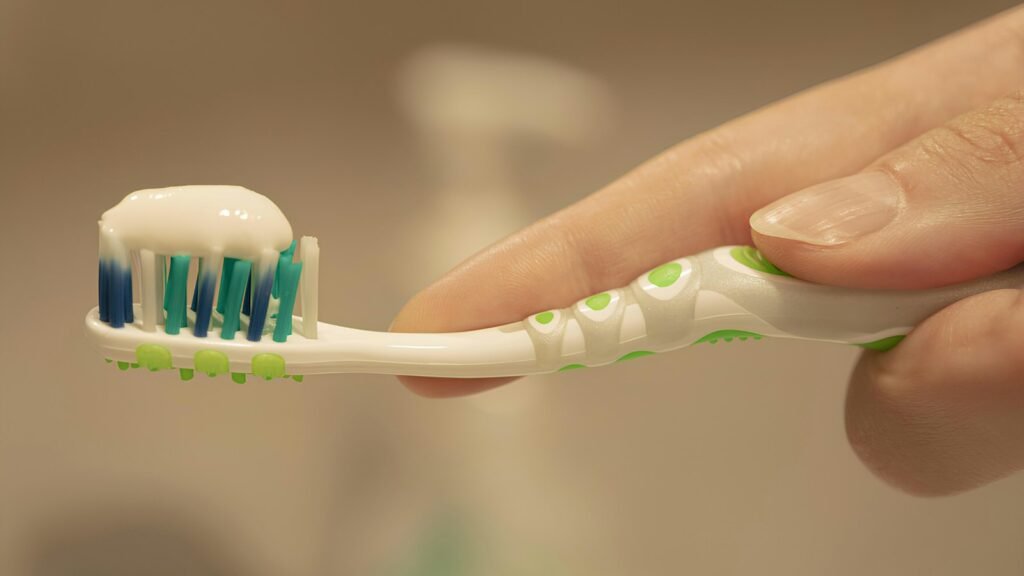
Squeeze a line of toothpaste onto a brush and it holds its shape: it does not run off the bristles, and the gritty cleaning particles do not settle out in the tube. That behaviour is engineered, and in many formulations part of the job is done by seaweed. Carrageenan and alginate are among the binders personal care makers use to control texture, stability and flow.
What a binder does in toothpaste
Toothpaste is a crowded mixture: abrasive particles, water, humectants such as glycerine or sorbitol, flavour, surfactant and active ingredients. Without a binder, the solids separate from the liquid and the paste weeps or hardens. A good binder has to do several things at once:
- Suspend solids so the abrasive stays evenly distributed during storage.
- Give the right flow: firm in the tube, easy to squeeze, and holding a neat ribbon on the brush.
- Release quickly in the mouth so the paste disperses when brushing starts.
- Stay stable across the temperatures a product meets in warehouses, shops and bathrooms.
Carrageenan, often as a blend of types chosen for the formulation, is valued for giving a smooth, short texture and good stability. Cellulose gums and xanthan are common alternatives, and formulators often choose between them, or combine them, on the basis of texture, cost and compatibility with other ingredients. For background on the carrageenan types, see kappa, iota and lambda in plain language.
Beyond toothpaste
The same properties are useful elsewhere in personal care:
- Lotions and creams: carrageenan and alginate thicken the water phase and help stabilise emulsions, adding body without a greasy feel.
- Gels: hair gels, after-sun gels and similar products use hydrocolloids to create a clear or translucent structure.
- Face masks: alginate is widely used in peel-off and setting masks because it gels quickly in contact with calcium.
- Shampoos and cleansers: thickeners help control viscosity so the product pours and spreads as intended.
We look at seaweed extracts and other cosmetic uses in seaweed in cosmetics.
Why consistency matters so much
Personal care products are made in large batches on fast filling lines, and consumers notice small changes in texture immediately. If a binder’s viscosity drifts from one delivery to the next, the manufacturer may have to adjust formulations, slow production or reject batches. That pressure flows back through the chain.
Carrageenan producers serving this market therefore want raw seaweed that behaves predictably: the correct species, clean and well dried, with stable moisture and low levels of sand, salt and foreign matter. Mixing species or lots of very different quality makes it harder for the processor to hit a tight specification. Refined grades are normally used in toothpaste, and the raw material demands of refining are set out in semi-refined vs refined carrageenan.
What personal care buyers tend to ask
- Is the ingredient consistent from batch to batch, and how is that checked?
- Which seaweed species is it made from, and where was it grown?
- Can the supply chain be documented back to the source area?
- Does it meet the relevant cosmetics and, for toothpaste, oral care regulations in the target market?
Frequently asked questions
Is the carrageenan in toothpaste swallowed?
Small amounts may be, as with any toothpaste ingredient. Carrageenan used in toothpaste is typically the same class of ingredient permitted in food, but buyers should always check the regulatory status for their specific market and grade.
Why not use only synthetic thickeners?
Some manufacturers do. Others prefer seaweed-derived binders for their texture, their performance with particular formulations, or because natural-origin ingredients suit their brand. The choice is a formulation and positioning decision.
Does the seaweed farm affect the final toothpaste?
Indirectly. Refining removes much of the variation, but raw material quality affects yield, processing cost and how easily the processor can deliver a consistent ingredient.
Working with Kospermindo
Kospermindo aggregates carrageenan seaweed from organised farmer groups in South and Central Sulawesi for processing factories and exporters. See our products and trade page or get in touch to discuss supply.