
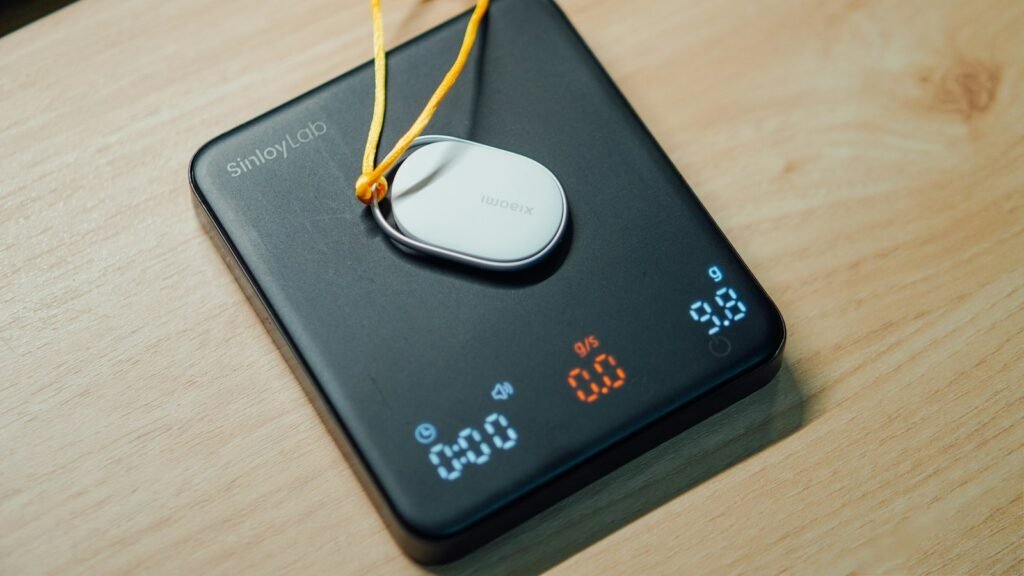
A seaweed farmer is paid for what the scale says, not for what was harvested. If the scale reads light, the farmer loses money on every sack; if it reads heavy, the buyer does. Because dried seaweed is sold by weight at almost every step of the chain, an inaccurate or distrusted scale undermines everything else — price agreements, quality premiums and long-term relationships.
Where weighing disputes come from
Most arguments over weight are not about outright cheating, although that happens. They usually come from a handful of ordinary causes:
- Worn or uncalibrated scales. Hanging spring scales and old platform scales drift over time and are rarely checked.
- Inconsistent deductions. A fixed amount taken off for the sack, or for “wet” seaweed, applied differently from one day to the next.
- Moisture changes. Dried seaweed keeps losing or gaining water. A sack weighed in the village and again at a warehouse days later will not weigh the same.
- No written record. When the weight is spoken rather than written down, there is nothing to check later.
- Unequal access. The farmer often cannot see the display, or does not know how the scale works.
The moisture point deserves emphasis. Weight differences between points in the chain are normal and should be expected; the problem is when nobody agreed in advance how they would be handled. Our article on moisture content in dried seaweed explains why.
What a fair weighing point looks like
Fair weighing does not need expensive equipment. It needs a few habits applied every time.
- Use a suitable scale and check it. In Indonesia, scales used in trade fall under the legal metrology system and should be verified by the relevant authority. Between checks, a known reference weight shows quickly whether a scale has drifted.
- Weigh in the open. The farmer or a group representative should see the reading.
- Agree deductions beforehand. Any allowance for sacks or moisture should be stated, the same for everyone, and written down.
- Record every weighing. Date, farmer or group, number of sacks, gross weight, deductions and net weight — with a copy for the seller.
- Keep records together. Slips that are filed by date and lot can be matched to warehouse and shipment records later.
Why this matters beyond the village
Weighing records are the first link in any traceability chain. A lot that arrives at a warehouse or a port with a clear history of weights, from the village to the container, is far easier to reconcile and far harder to dispute. The same records support systems such as Indonesia’s Warehouse Receipt System, where the receipt states the quantity held.
For buyers, fair weighing at farm level is also a social issue. Farmers who suspect they are being short-weighed have little reason to invest effort in better drying or cleaner seaweed, because they doubt they will be paid for it. Trust at the scale supports quality at the source. The daily labour behind each sack, described in a day on a seaweed farm, is what that scale is putting a price on.
Signs of a healthy weighing practice
When assessing a supplier, it is worth asking to see how weighing is done at collection points, not just at the warehouse. Look for scales that are in reasonable condition, weighing slips that farmers keep, deductions that are written rather than improvised, and a clear process for handling disagreement. A supplier that treats weighing casually at the bottom of the chain is unlikely to be meticulous further up.
Frequently asked questions
Why does seaweed weigh less at the warehouse than in the village?
Usually because it has continued to dry during transport and storage. The difference is normal, which is why weights should be recorded at each point and contracts should say how moisture is handled.
Is a digital scale always more accurate?
Not necessarily. A digital scale is easier to read, but it still needs to be suitable for the load, placed on level ground and checked against a known weight. A neglected digital scale can be as wrong as an old mechanical one.
Should farmers keep their own weighing records?
Yes. A copy of each weighing slip lets a farmer or group check payments and raise a problem with evidence rather than memory. It also supports savings, loans and planning.
Working with Kospermindo
Kospermindo has worked with seaweed farmer groups in South and Central Sulawesi since 2002, through Farmer Group Centres that provide mentoring, technical assistance and a cooperative savings and loan service. Learn about our warehouse in KIMA, Makassar, or get in touch.