
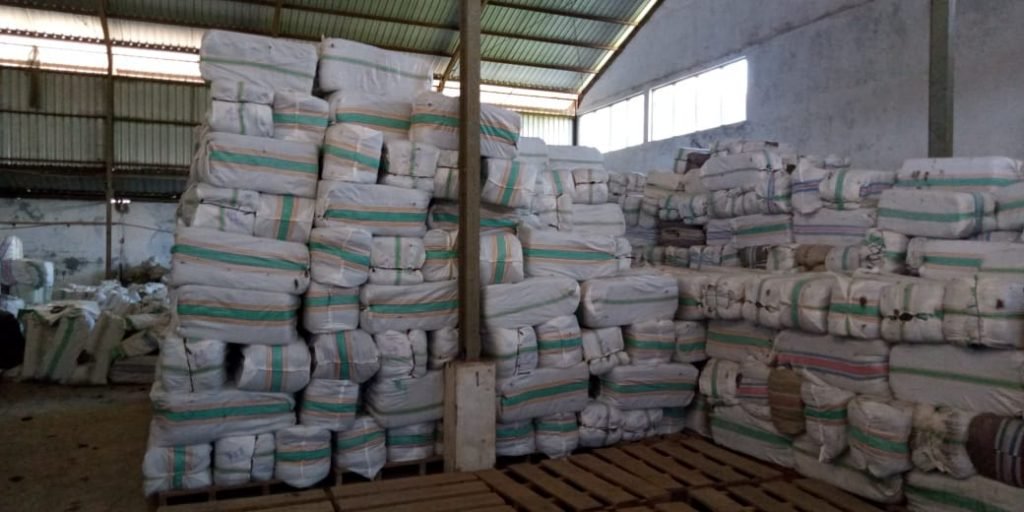
If you process carrageenan or trade dried seaweed, sooner or later your supply chain leads to Indonesia. The archipelago is one of the world’s largest producers of farmed red seaweed, and its warm, shallow coastal waters are well suited to the species the hydrocolloid industry depends on.
Sourcing well is another matter. Quality varies from village to village and season to season, and the chain between the farmer and the exporter can be long. This guide sets out what buyers should know before they start.
Know the species
Two groups of red seaweed dominate Indonesian production for the carrageenan market:
- Cottonii — Kappaphycus alvarezii, still widely traded under its older name Eucheuma cottonii. The main raw material for kappa-carrageenan, used for firm gels in dairy, meat and pet-food applications.
- Spinosum — Eucheuma denticulatum. The main raw material for iota-carrageenan, which forms softer, elastic gels.
Make sure your specification names the species clearly. Mixed lots are a common source of disputes.
What “good” dried seaweed looks like
Most contracts for raw dried seaweed come down to a handful of parameters. Agree them in writing, with the test method, before the first shipment:
- Moisture content. Under-dried seaweed loses weight in transit and can deteriorate. Set a maximum.
- Impurities. Sand, salt crystals, raffia, stones and other foreign matter. Set a maximum.
- Clean anhydrous weed (CAW). The share of clean, dry seaweed once moisture and impurities are removed — a good single measure of value.
- Carrageenan yield and gel strength. For processors, what the seaweed actually delivers in the plant.
Quality starts on the drying platform. Seaweed dried on clean raised racks, rather than on sand or bare ground, is consistently cleaner — which is why farmer training matters as much as price negotiation.
Understand the supply chain
A typical chain runs from the farm to a village collector, to one or more traders, to an exporter or processor. Every link adds cost and blurs the origin of the seaweed. Buyers who want consistency and traceability increasingly prefer to work closer to the farm, through organised producer groups that can aggregate volume, enforce drying standards and document where each lot came from.
Why source through a cooperative
A cooperative sits between thousands of smallholders and a single buyer. Done well, it offers what neither side can manage alone:
- Aggregation. Many small harvests combined into commercially useful lots.
- Standards. Training and group rules on drying and cleaning, applied across members.
- Continuity. Members with access to savings, loans and a guaranteed buyer are more likely to keep farming season after season.
- Traceability. A known group of farmers in known locations, rather than an anonymous market.
About Kospermindo
Kospermindo — Koperasi Serikat Pekerja Merdeka Indonesia — was founded in 1999 and has supported seaweed cultivation in South and Central Sulawesi since 2002. We organise farmers into groups within an industrial-cluster model, each served by a Farmer Group Centre that provides mentoring, technical assistance and savings and loan services, and we connect those groups with factories and exporters through long-term partnerships.
We have been part of the national conversation on the industry for years, from the first Indonesia Seaweed Forum in 2008 to the GEMARI SEHAT healthy seaweed movement in Makassar in 2010.
How to start
- Share your specification: species, quality parameters, test methods and indicative volumes.
- Agree a sample and inspection plan before committing to volume.
- Build a regular programme with farmer groups, so quality improves with each season rather than being renegotiated every shipment.
Read more about our work with cottonii farmers, or get in touch with our team to discuss your requirements.