
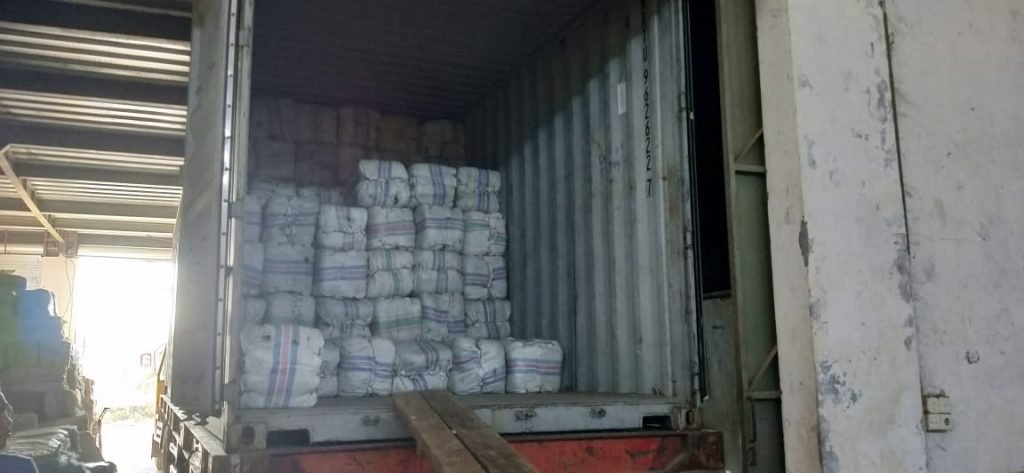
For years, dried seaweed was bought on price and quality alone. Where it came from mattered less than what it tested at. That is changing. Food, cosmetics and pharmaceutical companies face growing questions from customers, auditors and regulators about the origin of their ingredients — and seaweed is no exception.
Why traceability is hard for seaweed
Seaweed is grown by very large numbers of smallholders, often in remote coastal villages. A typical lot passes through a village collector and one or more traders before it reaches an exporter, and each step may combine seaweed from many sources. By the time it is shipped, its origin can be almost impossible to reconstruct.
What traceability should mean in practice
- Origin: which farmer group and which area the seaweed came from.
- Timing: when it was harvested and dried.
- Handling: how it was dried, stored and packed.
- Custody: who held it at each step, with weights recorded along the way.
- Lot identity: a code that links each sack or container back to those records.
Questions to ask a supplier
- Where exactly does this lot come from? Ask for the group or village, not just the province.
- How are lots kept separate? Mixing is the point where traceability is usually lost.
- What records exist? Weighing slips, drying and storage logs, warehouse documents.
- Can we visit? A supplier confident in its chain will welcome a field visit.
- What happens to a non-conforming lot? Traceability is only useful if problems can be traced back and fixed.
How farmer groups make it achievable
Traceability is far easier when the chain is short and the producers are organised. A cooperative knows its members, where they farm and when they harvest. It can keep lots from different groups separate, record weights at collection and link each lot to its source. Storage in a proper warehouse adds another layer of documentation — especially under Indonesia’s Warehouse Receipt System, where each receipt records quantity and quality.
For more on building a reliable supply from the start, see our buyer’s guide to sourcing cottonii.
Frequently asked questions
Is traceability the same as certification?
No. Traceability is the ability to follow a lot back to its source through records. Certification is an independent check against a standard — and usually depends on good traceability first.
How far back can seaweed realistically be traced?
With organised farmer groups and separate lots, to the group and the area it was farmed, with harvest and drying dates. Tracing to individual farmers is possible but depends on how lots are collected.
Does traceability cost more?
It adds some record-keeping, but it also reduces the cost of disputes, rejected lots and quality problems that cannot be traced back and fixed.
Working with Kospermindo
Kospermindo — Koperasi Serikat Pekerja Merdeka Indonesia — has worked with seaweed farmer groups in South and Central Sulawesi since 2002, through Farmer Group Centres and long-term partnerships with factories and exporters. Read about our warehousing and traceability work, or contact us to discuss documented supply.